
Montgomery County Active Warrants Explained
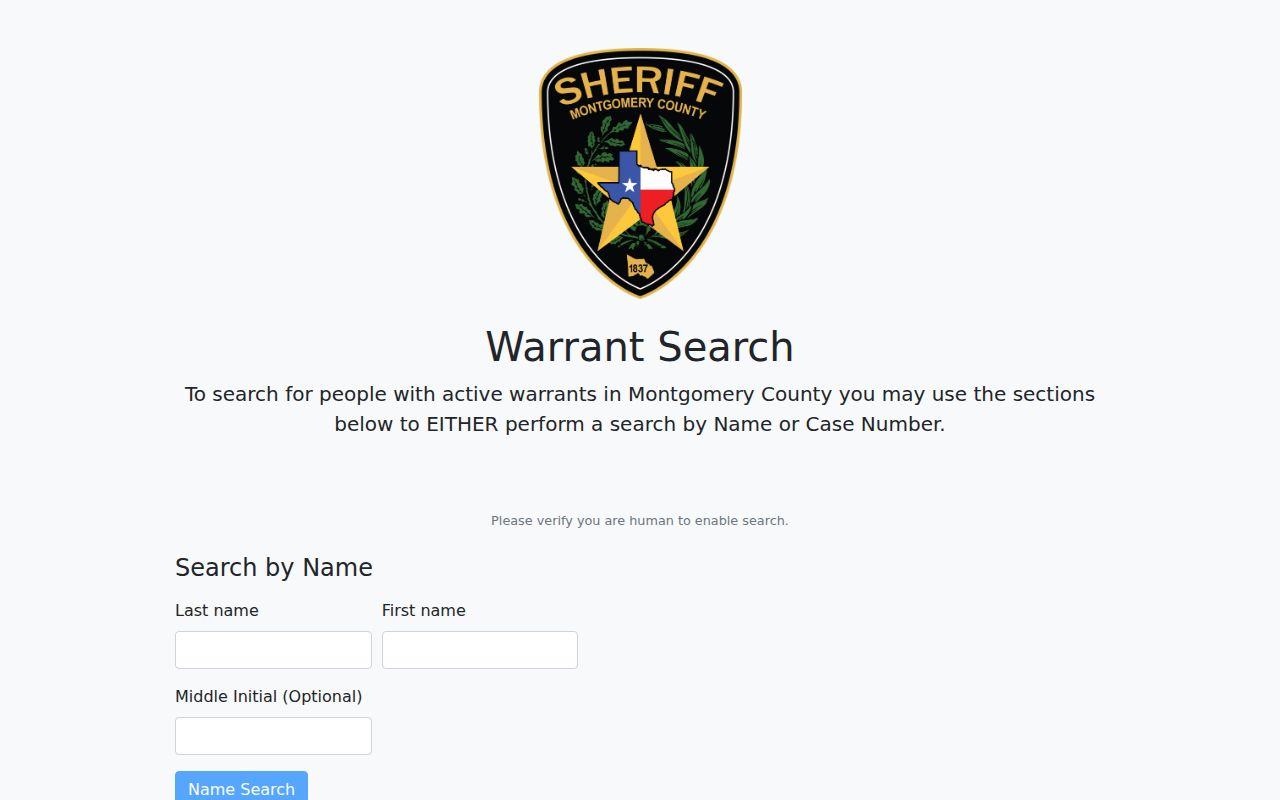
The Montgomery County Sheriff's Office runs a searchable active-warrant service. Type in a name or a warrant number. A staff member verifies the entry. MCSO frames it as a public service rather than a most-wanted roster, and it posts no separate roster page. The portal cannot explain why a process exists, show a payment the court accepted but has not posted, or reveal separate process from another jurisdiction. The Sheriff's notice says the list is refreshed regularly. Regular updates still do not confirm that a warrant remains active.
Montgomery County Warrant Search Scope and Limits
The public search asks for a full last name plus at least the first letter of a first name, with an optional middle initial. A warrant number works too. The landing page offers no dropdown for court, offense, or status. That matters. A municipal or JP case can still exist even when the county page returns no match, so a separate court check may be worth running. MCSO describes its data as a public service, not official court record, and warns against using it for legal action. It asks the public not to act alone. Treat any hit as a lead. Then confirm the status with the right office. The official MCSO active-warrant search shows the county agency's current public fields.
A Montgomery County warrant result belongs off public pages. The official record holder decides what may be disclosed.
How Montgomery County Tracks Active Warrants
The Montgomery County Sheriff's page carries a last-updated line and says the list is refreshed regularly. One recent line read September 20, 2026. The portal promises no exact interval. A service, a recall, or a fresh court action can lag behind the moment you check.
Note: The site shows a refresh timestamp, not a guaranteed real-time feed; verify a possible hit or a no-result with the issuing court.
Montgomery County Warrant Updates Need Court Confirmation
A timestamp on the Sheriff's page tells you when the listing last changed, nothing more. It is not the court's word on whether a warrant still stands. The Sheriff reserves the right to change the service without notice and warns that errors and discrepancies can occur. So a new order, a court recall, or a service return may move on a schedule the page never reflects. If the result is your own, keep the official URL and the time you checked it. Then ask the issuing court in Montgomery County directly. Ask whether the warrant remains active, whether a payment or a new setting has posted, and what document confirms a recall. Never act on stale saved evidence alone.
MCSO's strategic plan described this approximate historical count of unserved legal writs at the time of the plan. It is past system context, not a current warrant total.
Inside an Active Warrant Record
The public MCSO page shows no result row first. No private listing sits behind it. Do not expect a photo in every entry. A date of birth, bond, charge, issuing judge, or serving agency may or may not appear, so ask the official court or records office in Montgomery County to confirm the fields and current status of a case.
| Warrant number | Search key shown by MCSO; its exact local format is not published on the landing screen. |
|---|---|
| Case or cause number | Not visible before verification; ask the court if a result supplies one. |
| Type and offense | No type filter or offense result was visible on the landing page. |
| Issuing court / bond | Not confirmed by the search form; ask the issuing court for current terms. |
| Status and update | Active search with a refresh line; the page is not a real-time legal confirmation. |
Montgomery County Active-Warrant Fields Need Confirmation
The Montgomery County Sheriff's page offers a search key and an update line, not a full field inventory. A result may not show every detail you hope for. Issue date, court, charge, bond, service agency, and status can all vary by record. A court clerk or records clerk can say which fields appear and whether anything is withheld. When you call, use the warrant number or court case reference and ask one narrow question. A blank field proves nothing either way. And leave other people's personal details off your screen before you share anything.
Warrant Roundups and Most-Wanted Lists
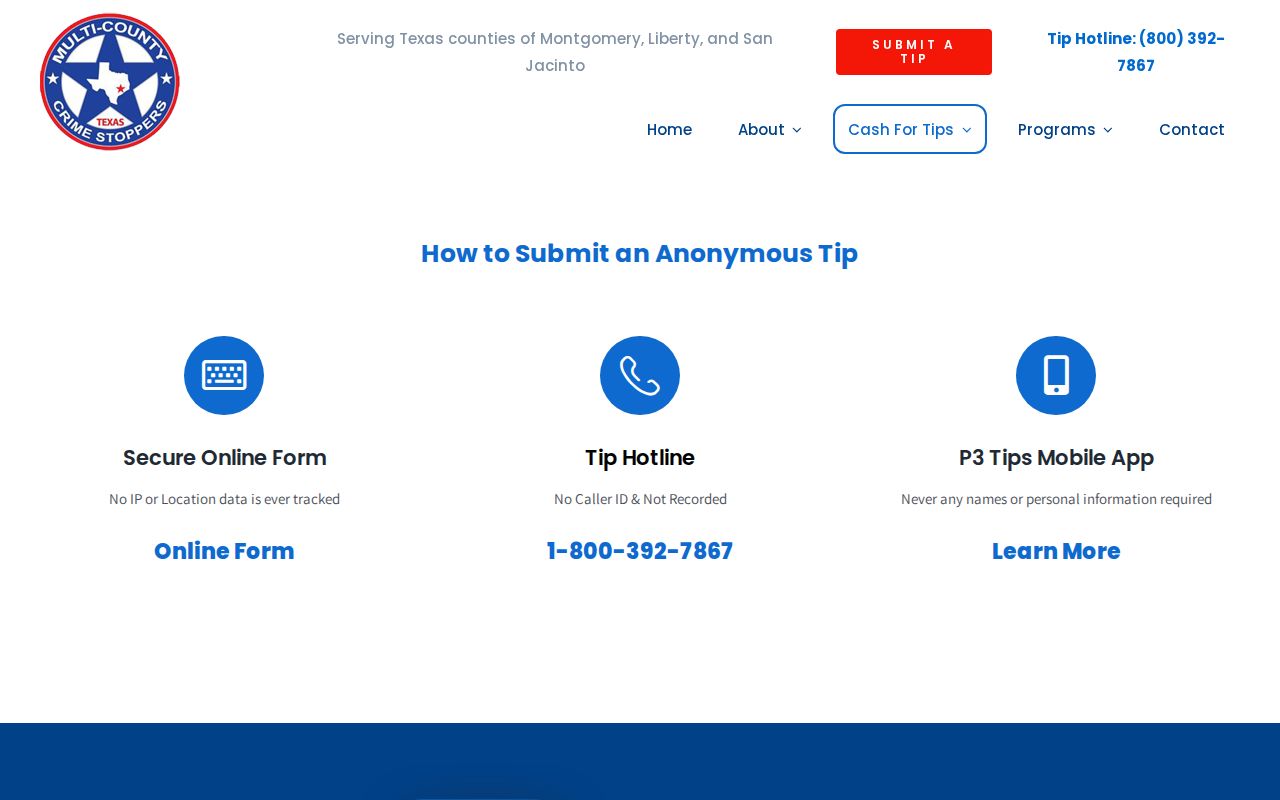
MCSO's active search and a curated public-safety tip program serve different purposes. The Sheriff's Office posts no Texas most-wanted roster. Multi-County Crime Stoppers covers Montgomery, Liberty, and San Jacinto counties. It accepts anonymous tips. Tips do not confirm or clear a warrant. Texas DPS runs the statewide Texas 10 Most Wanted program, which sits apart from any Montgomery County list.
Key Point: For an anonymous public-safety tip, use Multi-County Crime Stoppers; it is not a warrant-confirmation service or a complete county roster.
Use the issuing court or MCSO Records to ask about your own or a relative's case. Never approach or attempt to apprehend anyone.
Montgomery County Warrant Tips Are Not Status Checks
Crime Stoppers is a tip channel, not a court clerk. Its official page offers a secure form, 1-800-392-7867, and the P3 Tips app. A tipster need not give a name. A tip ID handles any follow-up. A reward may be available when information leads to a felony arrest. None of that clears your own warrant. Anyone facing a Montgomery County warrant should contact the issuing court or an attorney, not a tip line. The program is built for public-safety information, so treat a tip and a status check as two different errands.
For your own case, use a direct official court channel. Ask a Montgomery County clerk how a recall or payment gets confirmed.
When Your Name Is on the Warrant List
Finding your name is only the first step. The Montgomery County court that issued the warrant holds the real answers. Call the clerk, or a Texas defense attorney, and confirm the case number, the warrant's current status, and any bond or balance owed. Ask what appearance or recall options the court allows. A lawyer can arrange a voluntary appearance or ask the judge to recall or quash the warrant. Many Montgomery County bench warrants start with a missed setting. Only the issuing court can fix one. Even after you pay, the record may lag, so keep receipts and get written confirmation.
Important: Confirm a possible warrant with the issuing court and consult counsel before arranging an appearance, bond, or surrender.
Confirm Montgomery County Warrant Status Before Acting
Status starts with the court's own papers. The current case ledger, plus the officer's service or return record when one exists, tells you where a Montgomery County warrant truly stands. An online label can mislead you. It will not show a payment the court has not yet posted, and MCSO itself says its public page is not official court record. Ask the clerk three things. Which entry confirms a recall, how long posting takes, and whether an FTA/FTP report went to OmniBase. Then save the answer along with any receipt. The Montgomery County warrant records overview maps each local record holder and its role.