
Montgomery County Arrest Warrants Explained
Under Texas Code of Criminal Procedure Chapter 15, an arrest warrant is a written order from a magistrate. It directs a peace officer or named person to take the accused. The process starts with a complaint or affidavit. The magistrate reviews the required facts and probable cause before signing anything. In Montgomery County, District and County Courts handle higher-level criminal cases. JP and municipal judges may issue process within their own jurisdiction, including Class C cases. A JP can also act as a magistrate. That means the issuing authority and the clerk holding the later case record may be different offices.
Montgomery County Arrest Warrants Start With a Complaint
Chapter 15 sets firm rules for the paper itself. The warrant must identify the accused by name or a reasonably definite description, state the offense, and carry the magistrate's signature and office. The supporting complaint has its own list. It must identify or describe the accused, state facts showing an offense or probable cause, give the time and place as definitely as possible, and be signed by the affiant. Those requirements are why a Montgomery County warrant differs from an administrative hold or an unpaid-balance notice. They do not make the complaint or affidavit visible in a public search. Ask the issuing court in Montgomery County which parts of the file may be inspected.
Legal source: Texas Code of Criminal Procedure Chapter 15 covers the arrest-warrant and complaint process.
Inside a Montgomery County Arrest Warrant
The signed order and the case file are two records with related details. The MCSO public search shows no full result layout before human verification. In Montgomery County, the fields that come next describe what to ask the issuing court about. No item is promised in the Sheriff's search.
| Warrant number | Search key; no exact local format is published on the landing page, for example number supplied by court. |
|---|---|
| Named person | The order identifies the accused; public search fields do not include DOB or a photo. |
| Charge / offense | Ask the issuing court for the offense wording and classification. |
| Issuing judge / court | Identify the magistrate and court that signed or holds the process. |
| Bond / bail | Confirm amount and conditions with the official court or counsel. |
| Date and service | Ask for issue date, current status, return, and any recall order. |
Montgomery County Arrest Warrant Record Limits
The Montgomery County Sheriff's public landing page shows no complaint, affidavit, judge, bond, offense, or physical description before verification. A public case search is not a promise that the warrant paper itself is open. Some files stay closed. Sealed indictments, juvenile records, protected family information, active investigations, and federal records may be withheld or absent. Dates of birth carry extra protection. MCSO's Public Information form names a privacy basis for withholding public citizens' dates of birth. Ask the clerk what can be released.
Serving Arrest Warrants in Montgomery County
In Montgomery County, the office that issues a warrant is not always the office that serves it. MCSO deputies process county-assigned warrants. Constables serve process in their precincts. City police or municipal warrant officers serve city-court process. A JP or municipal clerk can identify the agency assigned to a particular order. After an arrest, booking, magistration, and bond questions turn on the charge and the court order. Montgomery County has no countywide walk-through location or same-day release promise. Ask counsel and the issuing court where to report, what identification is needed, and whether another hold could affect release.
Montgomery County Warrants Have Separate Issuers and Servers
In Montgomery County, the service route varies by court and assignment. County constables keep precinct offices. City police handle city cases and general law-enforcement duties. MCSO runs a Records/Warrants structure for county process. Oak Ridge North calls its Municipal Court Warrant Division an enforcement arm of that court, while the police department provides court security.
| Office | Local role described in research | Record question |
|---|---|---|
| MCSO | Countywide active search and agency records route | Ask whether the agency has a current entry or service return. |
| Constable | Precinct process and service | Ask which precinct has the assignment. |
| City police / warrant division | City process and local service | Use the city court for case status and recall. |
The Montgomery County sheriff's official site links the county warrant search and records channels. A serving agency never replaces the issuing court.

For the name of the assigned officer or current service status, contact the relevant official office in Montgomery County. Skip third-party directories.
Comparing Arrest, Summons, and Bench Warrants
An arrest warrant directs an officer to take the accused. A summons is different. It directs the person to appear without the same immediate custody command. A bench warrant or capias may follow a missed appearance or failure to comply with an existing court order. Read the process type on the court paper. The name alone does not explain the next step. For missed-date procedure in Montgomery County, see the bench warrant page.
| Feature | Arrest Warrant | Summons | Bench Warrant |
|---|---|---|---|
| What it orders | Take the accused into custody | Appear at the stated time | Address a missed or unmet court obligation |
| Basis | Complaint and probable-cause review | Notice to appear | Failure to appear or comply in an existing case |
| Who issues | Magistrate with authority | Court or authorized officer | Judge or court handling the case |
| How to respond | Confirm status and discuss appearance or bond with counsel | Appear as directed | Ask the issuing court about a setting or recall |
Montgomery County Arrest Warrants and Summons Follow Different Steps
A summons gives notice to appear. An arrest warrant directs an officer to take the accused. A missed court date creates a new failure-to-appear issue. But that issue has a different legal basis. It is not the original arrest-warrant complaint. Conroe's Municipal Court says a city citation may become a warrant after failure to appear by the due date or failure to comply with an agreement. The example covers Conroe citations only, not all of Montgomery County. Ask the court named on the paper which notice or order applies and what deadline remains.
If There's an Arrest Warrant for You
Start by confirming the warrant with the Montgomery County court that issued it. A public search is only a first look. For a felony or serious arrest warrant, talk to a criminal-defense attorney before you act. Counsel can arrange a planned appearance or walk-through, address bond, or move the Montgomery County court to recall or quash the warrant. If an appearance gets set, nail down the details first. Confirm where to report, the court's hours, and the booking and magistration steps. Ask whether any other hold exists. Keep every written instruction the court hands you, and ask what setting follows release; a receipt or bond paperwork does not resolve the underlying charge, and release timing never comes from a public search result.
Important: Get counsel and confirm the issuing court before arranging a voluntary appearance, surrender, bond, or request to recall the order.
How Federal Arrest Warrants Reach Montgomery County
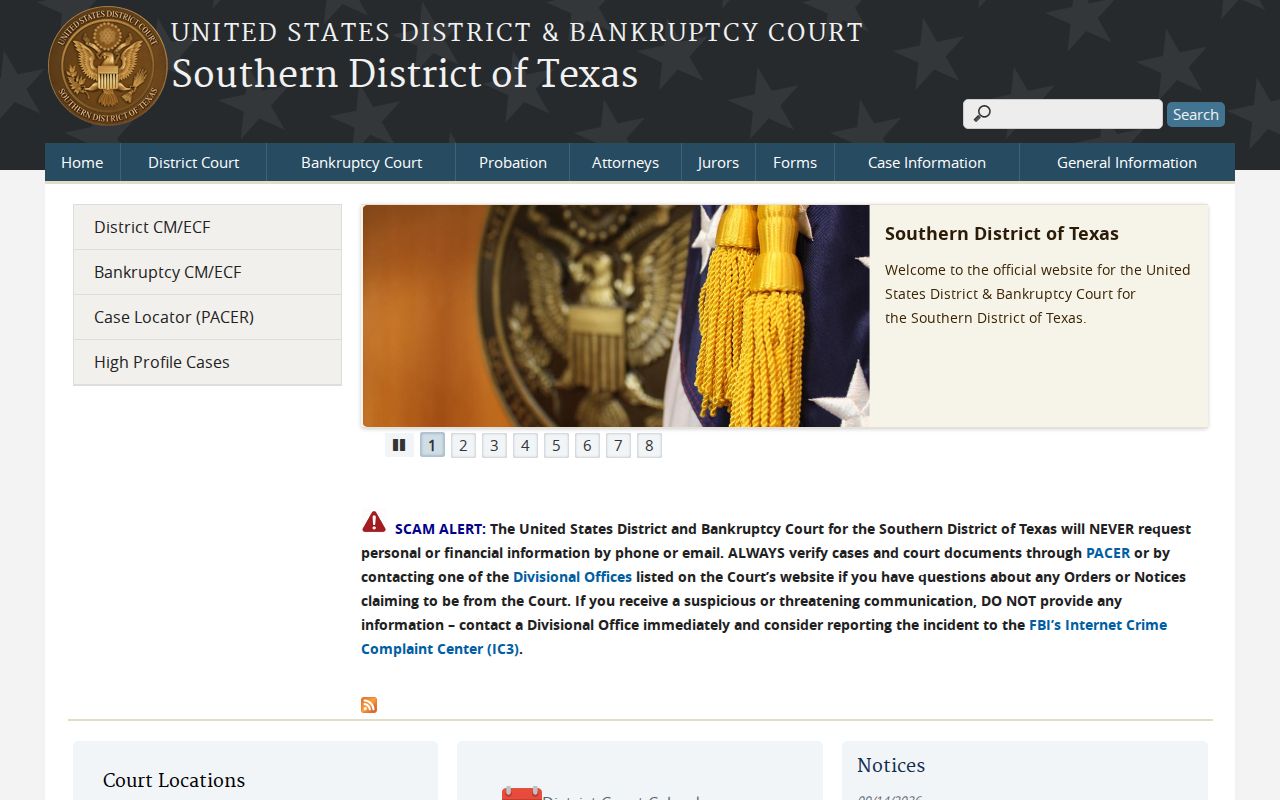
Federal arrest warrants travel a separate road. Montgomery County sits inside the Southern District of Texas, so a federal warrant here runs through federal court, not the MCSO portal, which is not a federal warrant database. Start with the Southern District of Texas official site for court records and PACER access. The U.S. Marshals Service also carries federal warrant responsibilities. Be careful what a docket proves. A federal docket may not display a sealed warrant, and it cannot confirm current service status. For the right record, contact the federal clerk or your counsel. One more caution from the court itself. It will not request personal or financial information by phone or email, so treat any such request as a red flag.
A clean Montgomery County search is not a clean federal check. Every jurisdiction keeps its own records, so confirm with each one directly.
Montgomery County Arrest Warrant Scam Checks
An unexpected warrant demand deserves a scam check. Verify it through the official court or Montgomery County sheriff website before paying anyone anything. The Southern District of Texas warns plainly. The federal court will not request personal or financial details by phone or email. A caller demanding gift cards, cryptocurrency, or a wire transfer is running a con, and an unverified number proves nothing. Hang up. Call back on a published official number instead. If a real case exists, the clerk can give you the case number, the court, and a valid way to pay or appear. No outside "warrant clearance" service can replace an order from the issuing court in Montgomery County.
Check the source: A demand is not verified because the caller knows a name or a court location.