
Checking for a Warrant in Montgomery County
The Montgomery County Sheriff's Office (MCSO) runs a public active-warrant search by name or number. Treat it as a lead. It is not a court docket, and it is not confirmation. Enter a full last name plus at least the first letter of a first name; a middle initial is optional, and the search also requires a human check. The landing page has no date-of-birth, court, or status filter. Match any result to the issuing court.
- Search by name or warrant number.
- Check the court named on the case paper.
- If there is no result, ask the likely court.
- Confirm next steps with the court and counsel.
How Montgomery County's Sheriff's Warrant Search Works
The official MCSO warrant search accepts a full last name plus at least the first letter of a first name, an optional middle initial, or a warrant number. Human verification is required. The landing page has no filters. It shows no date-of-birth, court, or status screen, and no sort, pagination, or export controls. The Sheriff says the list updates regularly, but it is not an official court record. No result is not clearance. Confirm a possible match with its Montgomery County court, because status can change.
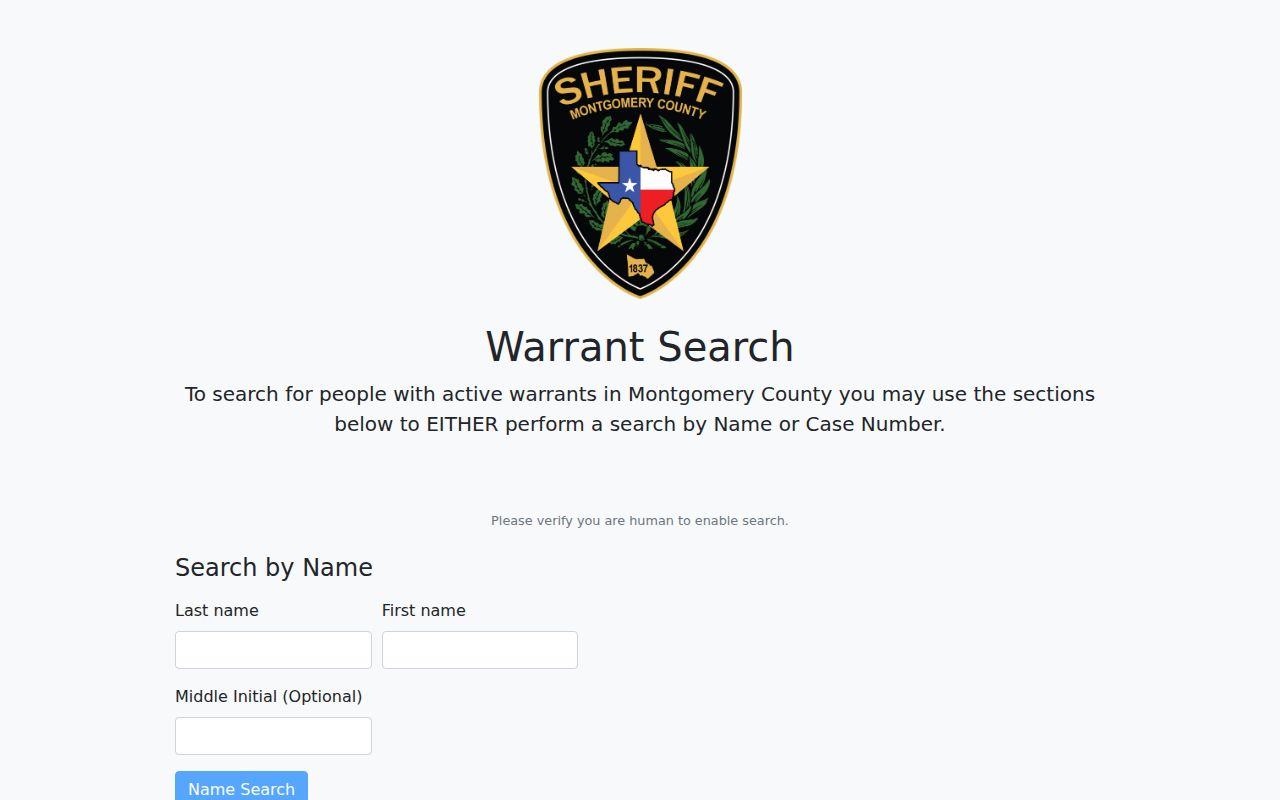
A possible match needs follow-up. Note the case reference and confirm it with the Montgomery County office that holds the record, since status can change after the portal is checked.
Montgomery County Warrant Types
In Montgomery County, the case decides which court issued the warrant. District Courts handle felonies. County Courts and County Courts at Law keep their own criminal dockets, while JP and municipal courts take traffic and Class C matters. The warrant type matters too. Arrest warrants, missed-date capiases, capias pro fine, and search warrants each serve a different purpose.
| Warrant Type | How It Arises | Who Issues It |
|---|---|---|
| Arrest warrant | Complaint and probable-cause review support the order. | Magistrate or authorized court |
| Bench warrant or capias | May follow a missed setting or court obligation. | Issuing judge or lower court |
| Capias pro fine | Post-judgment process for unpaid fines or costs. | JP or municipal court |
| Search warrant | Authorizes a search for specified evidence. | Magistrate under Chapter 18 |
Which Montgomery County Court Holds Each Warrant Record
The sheriff's portal is not the court docket. In Montgomery County, the District Clerk keeps felony records, and the County Clerk holds County Court and County Court at Law criminal files, including county-level misdemeanors. Every JP and municipal court keeps its own material. Traffic, Class C, FTA, and capias pro fine papers sit with each local court.
| Case route | Record holder | Public channel |
|---|---|---|
| Felony / District Court | District Clerk | Case Inquiry, records and research, or district docket search |
| County Court / County Court at Law | County Clerk | Odyssey Public Access, Criminal Records selection |
| JP or city citation | Issuing precinct or municipal court | That court's case, payment, or clerk channel |
Let the case caption pick the office. Nothing else identifies the right clerk. In Odyssey, choose Criminal Records rather than Civil and Probate or the Court Calendar, because an empty result in the wrong category answers no Montgomery County warrant question.
Inside a Montgomery County Warrant Record
Montgomery County has no shared record format. Each court's docket looks different. Depending on the court, it may list a cause or citation number, the charge, issuing court, event history, a balance, or a status. Ask the clerk what is public in that case.
| Number | Use the court or agency reference; formats vary. |
|---|---|
| Name | Confirm identity with the custodian; public details may be limited. |
| Charge | Ask the clerk to explain any code. |
| Issuing court | Contact this court about settings or recall. |
| Amount or bond | Ask for the current case ledger. |
| Status | Confirm active, recalled, served, or disposed. |
OmniBase Is Not a Montgomery County Warrant List
Texas has no single public statewide warrant search. TCIC and NCIC are law-enforcement systems, not public name-search tools. OmniBase Services of Texas supports the Failure to Appear / Failure to Pay program for participating courts under Transportation Code Chapter 706. A report can affect a license renewal. It is not a Montgomery County warrant roster. The official OmniBase program page explains the compliance route. Ask the issuing court whether your case was reported and what clears it, since a license hold and an arrest warrant are separate records.
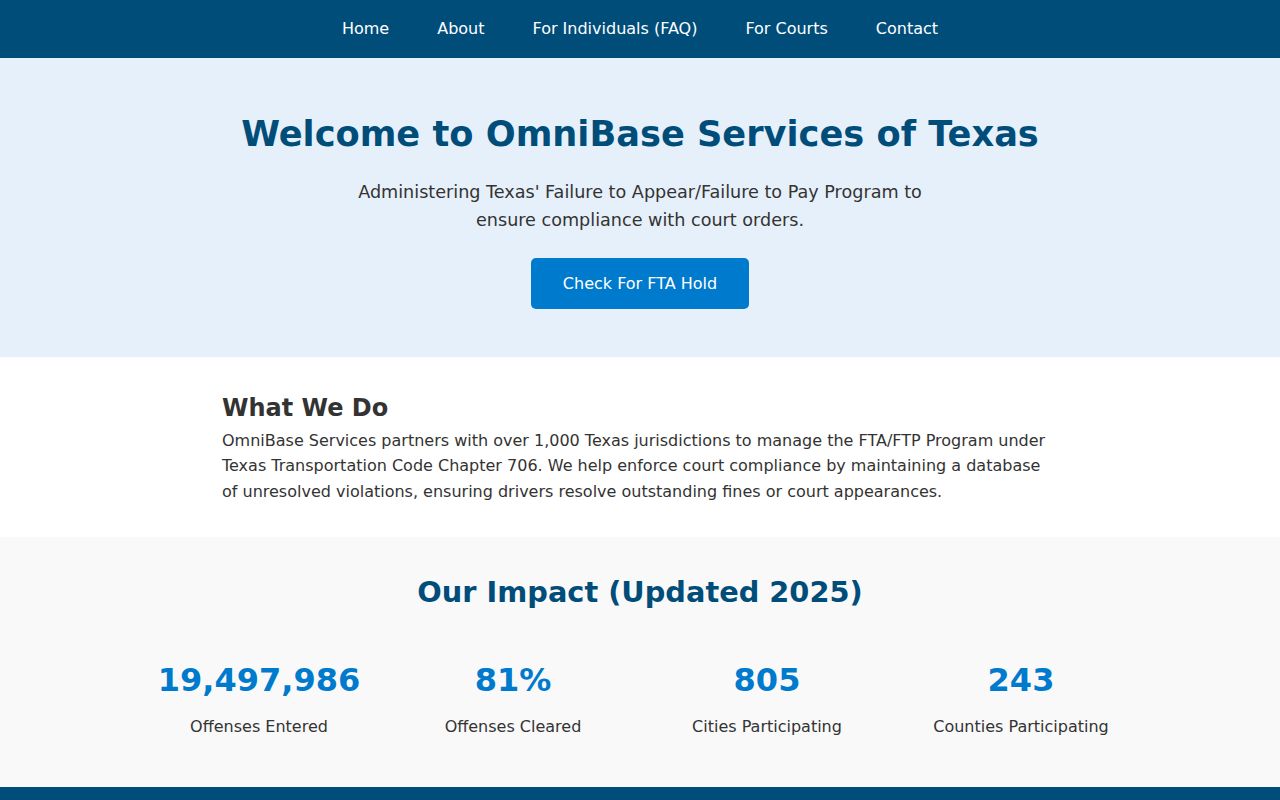
A license hold is not an arrest warrant. If a court confirms a Chapter 706 report exists, settle both questions separately with that Montgomery County court.
Issuing and Serving Warrants in Montgomery County
Judges and magistrates issue warrants. Service is a separate job. District and county matters stay with their own courts, and each JP or city municipal court in Montgomery County handles its fine-only docket. MCSO, constables, city police or marshals, and other peace officers may execute assigned process, but the issuing court keeps the case and any recall order.
Montgomery County Sheriff's Office
Official active-warrant search
Name or warrant-number lookup
Confirm case status with the issuing court
JP and City Warrants Stay With Their Courts
Montgomery County's five JP precincts and its city municipal courts keep separate traffic and Class C dockets, and no public portal combines them. For a ticket, read the caption. JP1 serves Willis and Montgomery. JP2 sits in Conroe. JP3 covers The Woodlands area. JP4 runs a New Caney office with a payment-plan route, while JP5 posts forms and time-served information. A city ticket stays with its own city court even when another agency made the stop.
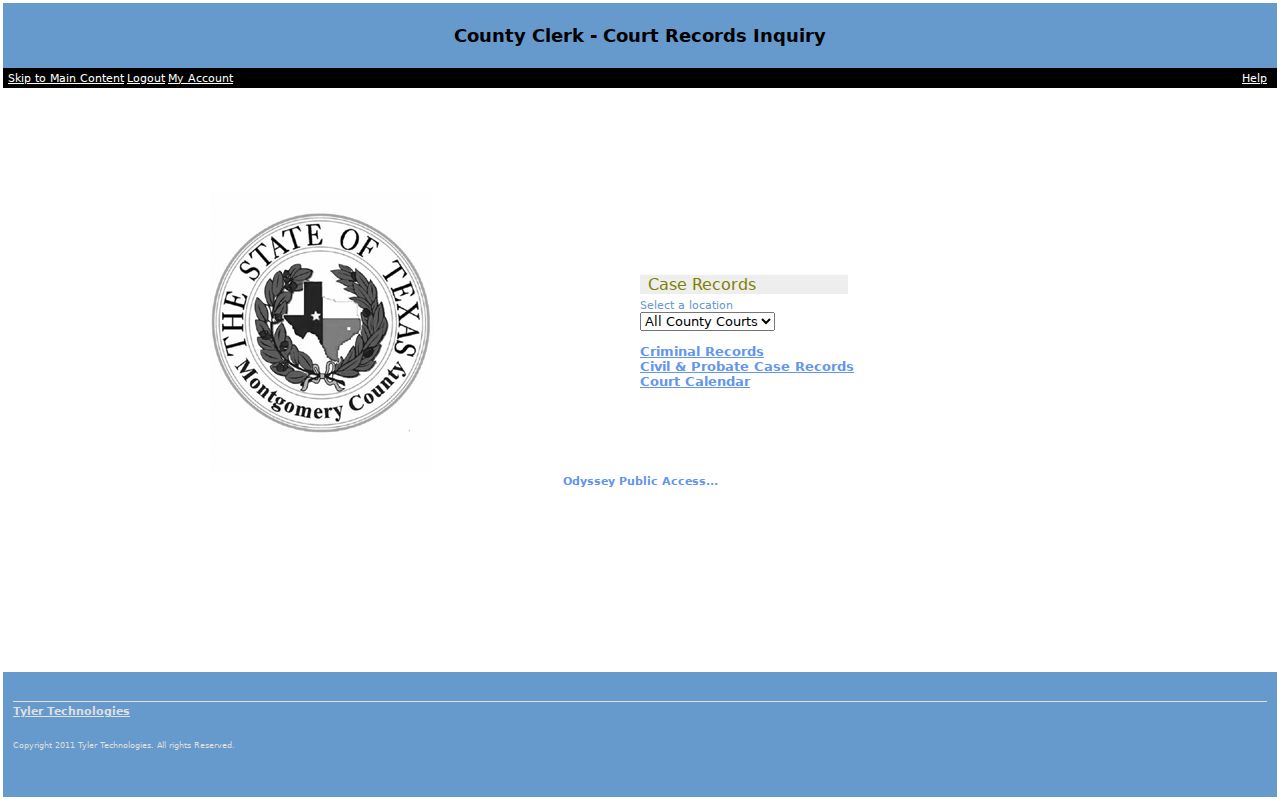
Pick by caption, not by the nearest building. Odyssey also keeps Montgomery County criminal records apart from civil and probate.
If You Have a Warrant in Montgomery County
Call the issuing court first. Ask for the case number, the current status, the amount or bond, and the options it accepts: payment, a new date, a hearing, or a recall request from counsel. A missed-date arrest warrant and a post-judgment capias pro fine can follow different routes. Get the court's instructions in writing. Keep proof of any payment or setting as well. A search result or a vendor receipt does not recall a Montgomery County order, so speak with a Texas attorney before arranging an appearance or surrender.
Important: Before appearing or surrendering, confirm the order with its issuing court and ask a Texas attorney how to arrange the next step.
Local Warrant Programs Have Different Terms
Montgomery County has no countywide amnesty. Conroe's budgets note earlier relief efforts, Willis budgets mention post-warrant cards and Texas Warrant Round Up, Magnolia calls its court a safe harbor, and Oak Ridge North defines local AW and CP procedures. None of that promises a shared event. Those pages do not establish a current waiver. Check the issuing city court's own notice, since a city offer cannot decide a separate JP, county, district, or federal case.
How to Request Existing Montgomery County Records
Montgomery County sheriff's records requests go through Records/Open Records and GovQA. The Public Information Act form lets you submit by email, mail, or pickup. It asks for locators: a case number, a date, an incident type, or a location. Chapter 552 covers material that already exists, so describe the record you want rather than asking for a new report or a legal answer. Some items come back withheld or redacted, and dates of birth can fall under the privacy basis listed on the MCSO form. Copy charges vary, so ask the custodian before you commit; no warrant-search or certification fee appears on the forms. The MCSO documents and forms page carries the request materials. Keep your submission confirmation in case Montgomery County asks for it later.
A slow response or a redaction concerns disclosure only, never the warrant's legal status. Ask the issuing court in Montgomery County to confirm status.
Montgomery County Warrant Records and Public Access
Montgomery County records sit inside the Texas Public Information Act, Government Code Chapter 552, which opens most government information to the public. Some things stay closed. Juvenile matters, sealed records, protected personal details, and parts of active investigations may come back redacted or withheld. Search-warrant papers follow their own timing and disclosure rules under Code of Criminal Procedure Chapter 18. Access to an agency database, though, is not the same as access to a court record.
Key Rules:
Government Code Chapter 552 sets the public-information framework and its exceptions.
Code of Criminal Procedure Chapter 15 covers arrest-warrant procedure, complaints, and probable-cause review.
Code of Criminal Procedure Chapter 45A governs current JP and municipal-court procedure, including capias pro fine process.
Federal Warrants Follow a Separate Records Route
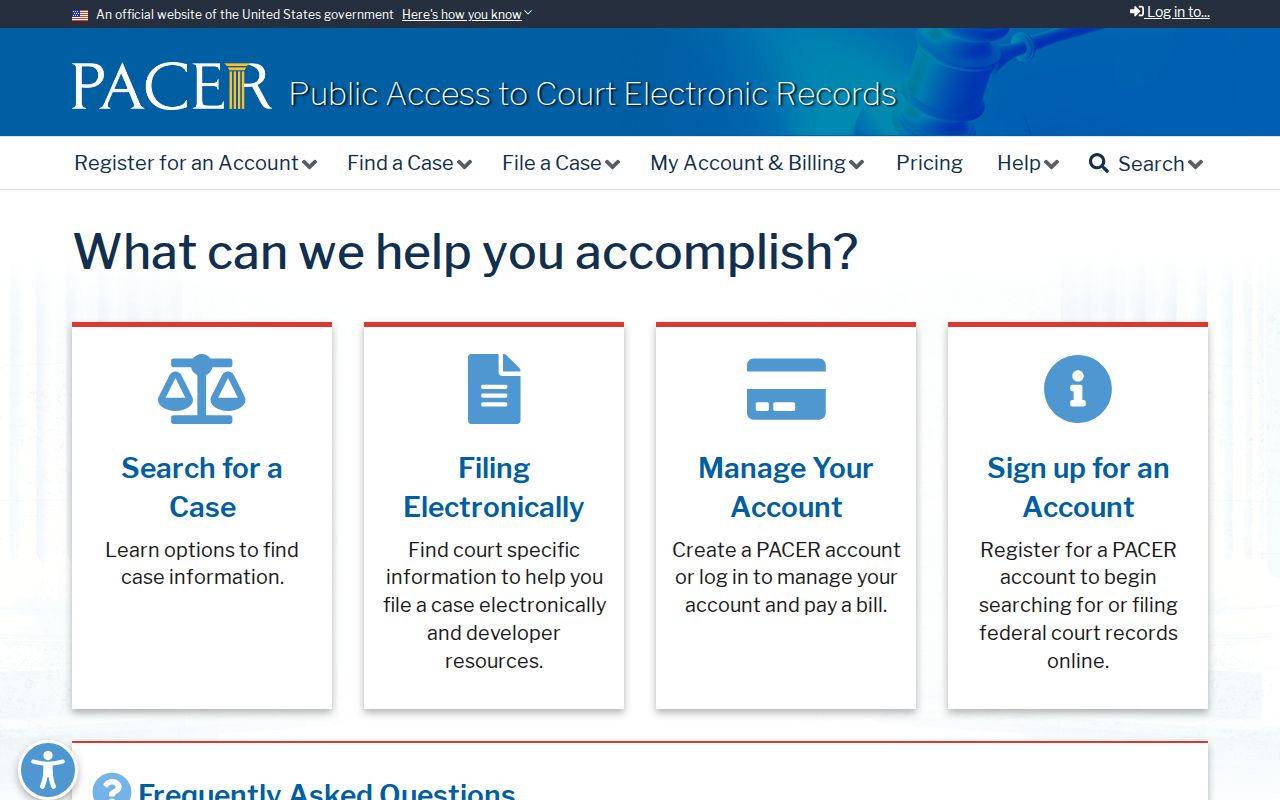
Federal charges in Montgomery County travel through the Southern District of Texas, not the county clerk or the MCSO warrant systems. PACER is the tool for federal case records. The U.S. Marshals Service serves federal warrants. Keep one caution in mind: a docket search does not prove a warrant is public or current. The Southern District of Texas site links PACER resources. Ask the federal clerk about access, and note the court's warning that it never requests personal or financial details by phone or email.
Verify unexpected demands through an official court address.
Montgomery County Warrants by City
City courts in Montgomery County keep their own fine-only and traffic dockets. So check a city citation with that city before trusting a county list. These five incorporated places rank highest by 2020 Census population. Conroe offers a search and a warrant-officer request route, while Willis routes compliance questions through its clerk. Shenandoah has a special path for older cases, Oak Ridge North publishes AW and CP labels, and Magnolia posts its own search plus safe-harbor guidance.
Conroe Warrant Search
89,956 · Municipal Court search, case/docket, and warrant-officer inquiry.
Willis Warrant Search
6,431 · City citations go to Willis Municipal Court; JP1 is separate.
Shenandoah Warrant Search
3,499 · Cases from before September 1, 2011 may route to JP3.
Oak Ridge North Warrant Search
3,057 · City court distinguishes AW from capias pro fine status.
Magnolia Warrant Search
2,359 · Municipal Court posts its own warrant update and payment routes.